 Zenbird Editorial Team
East Japan Railway Company (JR East) announced last month acceleration its application of hydrogen energy. Part of their strategy is the deploying of Japan’s first commercial hydrogen hybrid train, alongside other applications in power generation, urban development, and corporate finance mechanisms.
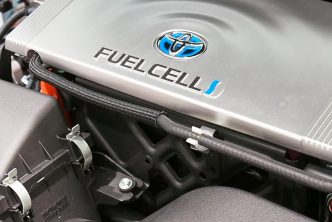
The company will commence commercial operations of the HYBARI hydrogen hybrid train by the end of fiscal 2027. The train, which uses a fuel cell system combined with storage batteries, will operate on the Tsurumi and Nambu lines in the Greater Tokyo Area. JR East conducted extensive testing from March 2022 to verify system stability. The company will fuel the trains with 35MPa high pressure hydrogen at the Kamakura vehicle base, providing a range of approximately 70 kilometres per fill.
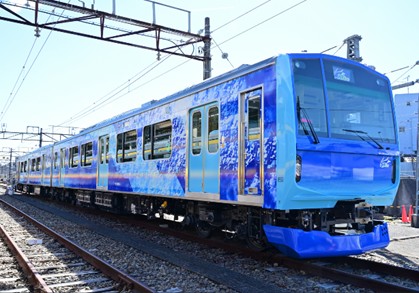
Furthermore, JR East started developing a next generation hydrogen hybrid train. This new model will utilise 70MPa high pressure hydrogen to achieve a driving range equivalent to diesel trains, targeting commercial operation by the end of fiscal 2030. The company views this technology as a potential export to address global environmental issues.
In the power generation sector, JR East committed to the 1% Hydrogen Procurement Declaration for its Kawasaki Power Station. The facility previously transitioned from heavy oil to natural gas. The company will now introduce small scale dedicated hydrogen combustion systems. It aims to replace at least 1% of its thermal power fuel with hydrogen. This marks the first phase toward a shift to zero carbon hydrogen combustion by 2050.
Hydrogen integration extends directly into JR East’s urban development projects. In the Karuizawa area, the company joined the Asama Zero Carbon Consortium in November 2025 to establish a hydrogen station and stimulate local demand. At Takanawa Gateway City, the company implemented fuel cell trucks for logistics and waste collection. It also expanded the JR Takeshiba Hydrogen Shuttle Bus network to serve the area. To further drive decarbonisation, JR East tripled its internal carbon pricing from 5,000 yen per tonne of carbon dioxide to 15,000 yen. This financial mechanism will accelerate capital investments in energy saving technologies such as high efficiency air conditioning and LED lighting across the organisation.
[Reference] JR East News Release (Japanese)