 Roger Ong
On 19 May, UMITO Partners held an online press session to share the details of the Blue Frontier Fund, an upcoming investment in collaboration with Beyond Impact, a Swiss-based impact investment firm.
This fund is designed to address the intersection of ocean environmental degradation and investment opportunity in innovative marine solutions. The fund would serve to protect and actively regenerate marine ecosystems while potentially creating sustainable new industries.
Shunji Murakami, Founder and CEO of UMITO Partners, opened with the company’s belief that the ocean holds immense untapped potential for both environmental restoration and economic development. With a target size of approximately 14 billion yen, it will focus on late seed to Series B stage investments that align with the company’s purpose of reconnecting humanity with the ocean in a mutually beneficial relationship.
The severe environmental problems we are facing now
We were given a stark reminder of the problems our oceans are facing, given how they are interconnected and accelerating. Five major crises are pushing marine ecosystems and human civilisation to the brink.
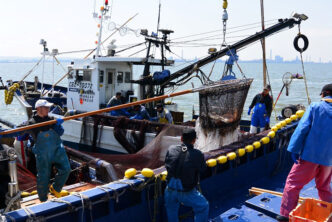
The most fundamental is the alarming rise in carbon dioxide emissions driving climate change, which in turn exacerbates the degradation of coastal ecosystems and the rapid decline of fisheries resources. Water quality is deteriorating at an unprecedented rate, while marine plastic pollution has reached such extreme levels. In the Pacific garbage patch, 75-86% of large plastics originate from fishing activities.
Overfishing has already rendered 35.5% of natural fisheries unsustainable according to 2025 data, with natural catch levels plateauing at approximately 92 million tons annually, making further expansion of traditional fishing impossible. Aquaculture, while expanding to meet growing demand, faces its own constraints: fishmeal and fish oil costs have surged over the past two decades due to geopolitical disruptions, coastal space is limited, environmental regulations are tightening, and disease risks are rising.
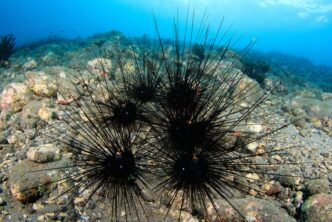
These marine problems extend far beyond the ocean itself; agricultural runoff causes eutrophication in marine and freshwater systems, creating dead zones where aquatic life cannot survive, while the global food production system contributes 26% of greenhouse gas emissions, with livestock alone accounting for 14% of that. Marine biodiversity is threatened by ocean warming and acidification, which has already resulted in the loss of 43% of coral and 13% of bivalve populations.
These environmental crises are now manifesting as economic disparities, food security losses, and increased natural disasters, posing existential threats to the stability of civilised society.
How Blue Frontier Fund will approach marine problems
Accelerating solutions become imperative against these seemingly insurmountable issues, and the Blue Frontier Fund is highly strategic. Murakami shared that the fund will concentrate its investments across three strategic areas.
The first and largest area constitutes 65-70% of the portfolio, and will focus on developing new sustainable protein sources from the ocean through blue biotechnology and food technology, addressing the critical gap between the limited capacity of traditional protein sources and growing global protein demand. This encompasses innovations such as protein derived from algae and microalgae, fermentation-based alternative seafood products, sustainable seafood-derived nutrients, and the upcycling of underutilised marine resources.
The second area, representing 20-25% of the portfolio, targets marine biomaterials, developing new materials from ocean sources to replace petroleum-based products across industries. This includes packaging materials, food additives, low-carbon seaweed-based textiles, and components for cosmetics and pharmaceutical applications.
The third area, also accounting for 20-25% of investments, is ocean climate technology, which aims to reduce CO₂ emissions while actively restoring marine ecosystems by leveraging the ocean’s natural capabilities to address climate change. This encompasses carbon removal technologies, autonomous solutions for marine pollution recovery, and technologies to make maritime shipping more efficient and low-carbon.
Together, these three domains seek to unlock the ocean’s latent market potential, estimated at 200 trillion yen. It will also address the current underinvestment in the blue economy, which receives only about 1% of the 24 trillion dollar sustainable finance market.
Awareness and foundational values are important too
Currently, there is still a lack of awareness of the ocean’s potential and the startups emerging to address its challenges. Murakami believes that information needs to spread beyond those already interested in order to address underinvestment and stagnant capital flow.
He also shared that conventional problem-solving often creates new problems in a self-perpetuating cycle, and breaking this requires a deeper, values-driven perspective. Perhaps there needs to involve balancing regulatory “brakes” (policies and restrictions that limit harm) with innovative “accelerators” (technologies and opportunities that inspire proactive change).
Ultimately, Murakami advocates for a philosophical realignment: moving from exploitation or passive conservation to actively regenerate the ocean, to return it to a state closer to its pre-industrial harmony, which, working along the Blue Frontier Fund, will help humanity rethink its relationship with marine ecosystems.
[Reference] Blue Frontier Fund Feature Page